Emptiness & the Blueprint for Self-Love
when parts attack: the little empty dragon

Feelings of emptiness are some of the most harrowing feelings we can experience in these squishy, delicate human bodies. I have a theory about emptiness, which is that -
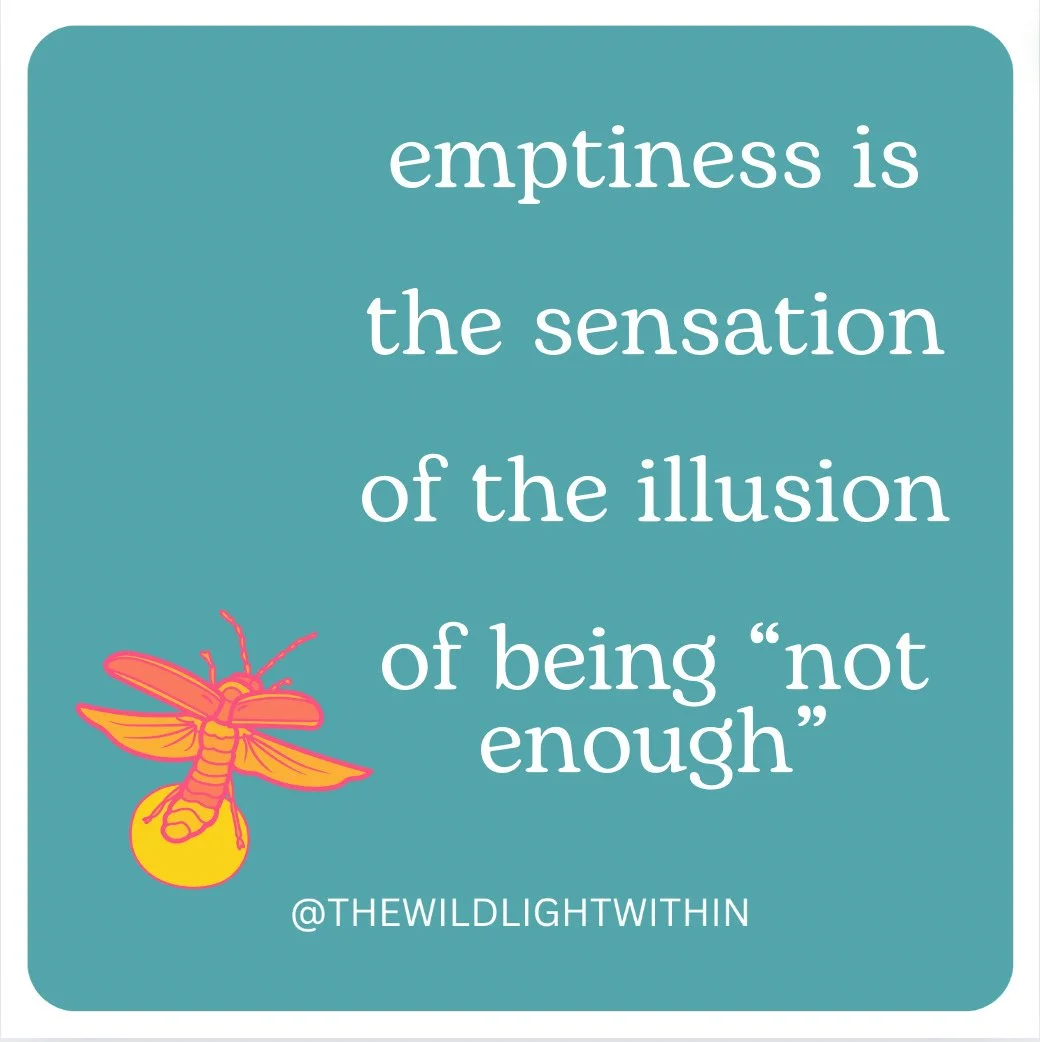
Emptiness is the somatic sensation of the illusion of not being enough.
Kids are made of body and emotion, and if they do not hear good things about themselves reflected back to them from their caregivers, they will have a harder time forming a blueprint for self-love. Neurodivergent kids are especially prone to this, as they receive negative feedback about their behavior dramatically more often than their peers. Neurodivergent kids also struggle with rejection and work harder than their peers to avoid loss (both of which make sense given how often they’re criticized), and end up internalizing a lot of self-hate because 1) they often can’t control the thing they’re getting in trouble for, and 2) no one explains to them how unreasonable the expectations being placed on them actually are.
Neurodivergent kids (and adults) often get backlash for not doing what they’re “supposed to be doing,” but rarely is it explained to them that the problem is the expectation, not something inherently wrong with them. A neurodivergent kid who struggles to regulate their emotions and impulsivity has no choice but to believe they are bad at their core when no one will admit that the problem isn’t them, but the unspoken rules of conformity.
I distinctly remember getting into trouble, or making people upset, when I missed social cues or committed a social faux pas - but no one would (or could?) explain why what I had done was wrong. Mostly, I imagine, we follow these social rules without consciously realizing it, so when someone fails to play along, it feels wrong internally but we’re not sure why. We just know it’s wrong, and it came from the weird kid.
So being in trouble regularly (or making people angry/upset, which may as well be the same thing as being in trouble when we consider how important social connection is) but not understanding why meant that I was constantly on the verge of doing something “bad.” I didn’t know why, or how, or what I could do to be better, I just knew that at any moment, I could screw something up. I just knew that I couldn’t be trusted. I just knew that I had to stay hypervigilant to other people’s reactions to reduce the likelihood of being rejected.
It isn’t a wonder that neurodivergent kids develop anxiety and depression. Or rejection sensitivity. Or behavioral issues. Or people-pleasing, the action whose core is the belief that the only worthwhile thing about us is the ways in which we can serve others at the expense of ourselves.
So if kids are only criticized for what they’ve done wrong and infrequently, if ever, told what good qualities they have, and how they deserve to be treated well by others…how will they know what’s good about them? How will they be able to discern whether or not they’re being treated well?
And if they don’t know what’s good about themselves - but know lots of things that are bad about themselves - how can they love themselves in adulthood? Kids who grow up never feeling “good enough” do not have an internal schema for what makes them good. A sense of emptiness can be a consequent feeling, a sense that we don’t belong, that we’re useless, and that there isn’t anything worth loving about us. That we’re little aliens just scrabbling for a dash of human love and approval because we somehow got trapped on a planet not for us, and boy we better be grateful for what scraps we get.
The first time I experienced the part of myself where the emptiness started, she was terrifying. She put on a scary, dragon-like visage because being threatening feels a lot safer than being threatened. But as Richard Schwartz, the founder of parts work, says, no part can hurt us when we’re unafraid of it. When the dragon didn’t work, beneath it was a confused little kid who was entirely too young to be feeling so empty, so directionless and unclear about her place in her family and in the world.
She didn’t know what made her good, so she chose to be scary instead.
The emptiness she embodied was an illusion. There was plenty good about her, just like there’s plenty good about every kid, because kids are almost exhaustively good.
I had to work backwards to build the blue-print for myself. I had to reflect on the values I live by, the principles that guide my choices and actions, and what things I loved in others that were also true about me. I had to consider that if I was surrounded by kind, loving, honest people, that I likely must also be those things. I had to reflect on my willingness to take responsibility when I cause harm, and I had to reflect on the growth I’ve done around having healthy boundaries. I had to reflect on how hard I’ve worked to be good.
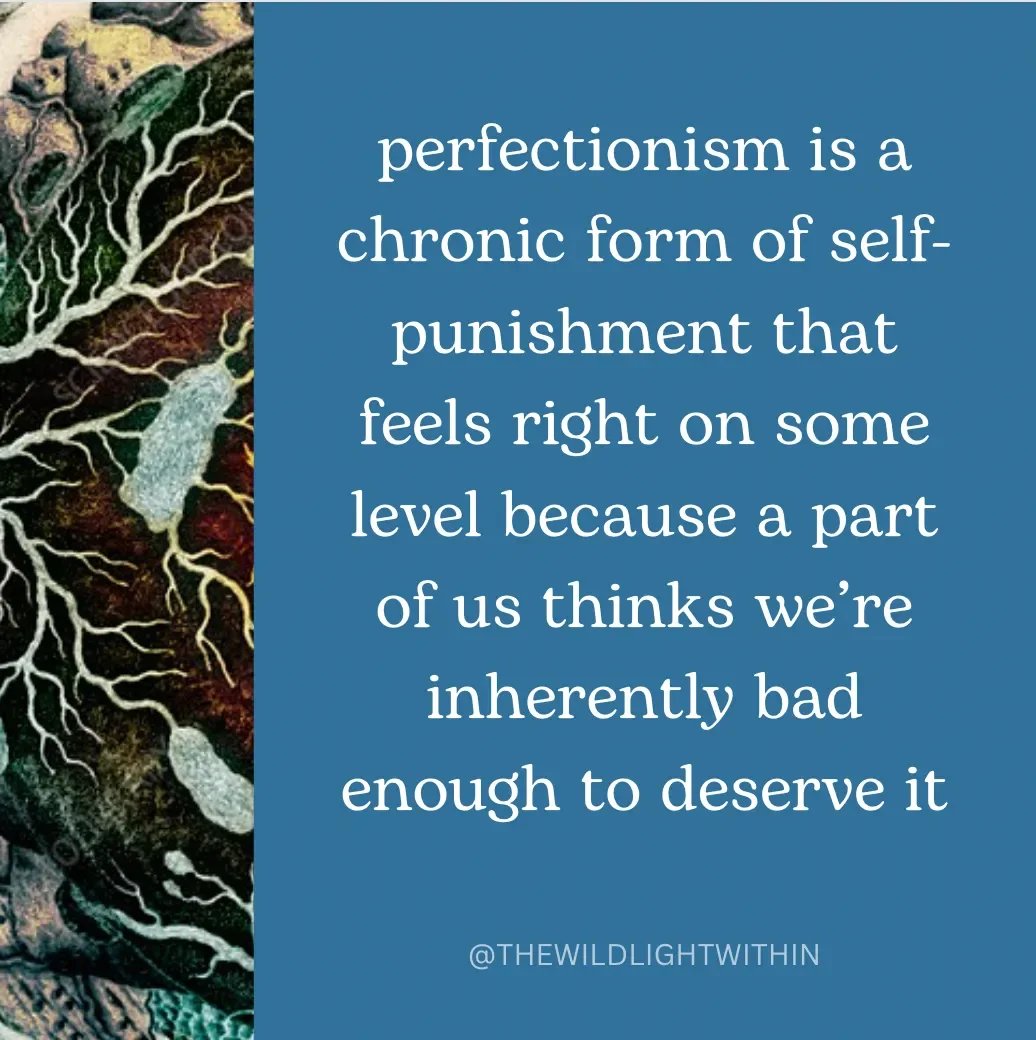
Most importantly, I had to decide to believe that all of those things were enough. I had to decide to believe that I was already enough. I had to decide to believe that my urge towards perfectionism was a chronic form of self-punishment that felt right on some level because a part of me thinks I’m inherently bad enough to deserve it.
I had to decide to believe that normal human “flaws” - like impulsivity, big emotional reactions, being annoying, or sometimes getting it wrong - didn’t actually make me unlovable.
And I’ll prove it to you: can you name a single person in your life that you love deeply who is never, ever, even a little bit occasionally annoying?
Accepting ourselves as we are in the moment requires coming to terms with the fact that we were failed over and over again as kids. That we lost a lot of our innocence because the adults around us couldn’t take the time to examine their own reliance on unspoken social norms and projected their fears about rejection onto us. No kid deserves that, but we often treat our inner children exactly as though they deserve it.
Learning to love ourselves through the emptiness requires grieving how mean we’ve been to ourselves in an effort to keep ourselves safe from being abandoned.
It doesn’t mean that the emptiness goes away forever, but it can mean that we recognize the emptiness for what it is: an untruth that lives in the body, given to us by someone else, and that requires nothing more of us than loving gestures of reassurance, acceptance, and comfort.